
Home -> Law Blog Directory -> Podcasts Blogs -> InternetCases.com
(866) 635-2689 for Personal Injury or (866) 635-9402 for Criminal Defense
Find a Local Lawyer
Divorce (866) 635-6190
Personal Injury (866) 635-2689
Criminal Defense (866) 635-9402

Podcasts
: InternetCases.comIllinois court sets standard for unmasking anonymous commenters
By Evan Brown

Maxon v. Ottawa Pub. Co., — N.E.2d —, 2010 WL 2245065 (Ill.App. 3 Dist. June 1, 2010)
The rules of civil procedure in Illinois permit an aggrieved party to file a petition with the court asking for an order requiring unknown potential defendants to be identified. This is called a Rule 224 petition.
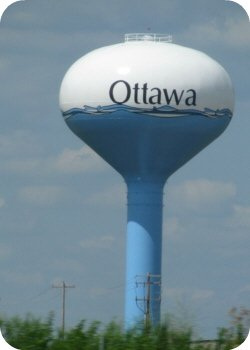
A couple from Ottawa, Illinois got their feelings hurt over some anonymous comments left in response to content published by the local newspaper on its website. Wanting to sue for defamation, the couple filed a Rule 224 petition. The newspaper opposed the petition. (For something similar, see Enterline v. Pocono Medical Center.)
The trial court denied the petition, applying the standards articulated in Dendrite v. Doe and Doe v. Cahill, finding that the petitioners had not presented a strong enough case for defamation to justify the unmasking of the anonymous commenters. Those cases require, among other things, that a party seeking to identify an anonymous speaker make efforts to notify the anonymous party, and present enough evidence to establish a prima facie case of defamation (Dendrite) or survive a hypothetical motion for summary judgment (Cahill).
The aggrieved couple sought review with the Appellate Court of Illinois. Reviewing the decision to deny the Rule 224 petition de novo, the court reversed and remanded, ordering the identification of the anonymous speakers to be made.
In reaching its decision, the court rejected the newspaper?s (and amicis?) arguments that the trial court should apply the rigorous standards of Dendrite and Cahill. That?s not to say, however, that the court left anonymous speakers at great risk of having their First Amendment rights trampled upon.
The court held that the mechanics of Rule 224 adequately protect the potential First Amendment rights of anonymous internet speakers. Here?s why, according to the court:
- The petition must be verified ? the threat of the pain of perjury should keep out half-hearted claims.
- The petition must state the reason discovery is necessary.
- The discovery is limited only to learning the identity of the potential defendant.
- Most importantly, before the discovery will be permitted, the court must hold a hearing and determine the petition sufficiently states a cause of action.
In this fourth step, the court is to apply the standard it would apply in a Section 2-615 motion. Such a motion is, essentially, the Illinois version of a motion to dismiss for failure to state a claim. That is no insignificant test, because unlike federal court and other state jurisdictions, Illinois requires fact pleading. That means the petition needs to include a significant amount of specific information to survive the motion to dismiss.
A troubling aspect of the ruling is the omission from the test of a requirement that the party seeking discovery attempt to notify the anonymous target of the inquisition. The appellate court held that a trial court may, in its discretion, impose such a requirement.
But it would be nice to know that the real party whose First Amendment interests are at stake (the anonymous speaker) is guaranteed a fair opportunity to argue from his or her perspective. After all, it?s that party with the real incentive to do so. Let?s hope the trial courts exercise that discretion wisely (and that they know in the first place that they have that discretion).
Photo courtesy Flickr user TheTruthAbout… under this Creative Commons license.
Full post as published by InternetCases.com on June 17, 2010 (boomark / email).
Selection of State Supreme Court Judges
How State Court Judges are Selected
Law Enforcement and Criminal Justice Career Choices
Descriptions of law enforcement occupations
California Supreme Court Proposition 8 Decision
Court Rejects Challenges to Proposition 8, but Finds Marriages Valid
Is Barack Obama a Natural Born Citizen?
Wrotnowski v. Bysiewicz (Supreme Court): Does Obama meet the constitutional requirements to be President
Heart of Atlanta v United States
Supreme Court Decision: Civil Rights Act Protected by Interstate Commerce Clause
Unwed Fathers' Rights in Adoption
Landmark Cases in Adoption Law Shape Law with respect to Unwed Fathers
Ebay Fined
French Court Sets Fine at $61 Million
Illinois Ground Beef Recalled
due to Possible E. coli Contamination
Illinois Residents
Exposed to Potentially Carcinogenic Drinking Water
University of Illinois Medical Center
Potential $14 Million in Malpractice Settlements
Little Tikes Recalls Children?s Toy Workshop Sets
Little Tikes Recalls Children?s Toy Workshop Sets
VA Sets New Benefit Rules for Agent Orange-Related Ilnesses
Agent Orange-Related Ilnesses VA Sets New Benefit Rules

#1 Online Legal Resource

On 08-25 at 15:46PM
Acute perpendicular parking #NYPD #NYFD
On 08-18 at 22:18PM
Parallel parking gone bad. Too much gas UES NYC
On 08-18 at 21:41PM
UES NYC
On 08-18 at 21:25PM
Twitter suspends journalist critical of broadcast partner's coverage on dubious grounds @guyadams #nbcfail #twitterfail
On 07-30 at 17:57PM
Model example of 1st Amendment suppression by the People of New York City's Michael Bloomberg #OWS #NYPD
On 07-12 at 21:07PM
AG Holder lackadaisical on Operation in our Sites domain name seizures & RIAA lobbied free speech suppression @dajaz1
On 06-08 at 22:44PM
Why is the Catholic Church going to court over Obama contraception policy? @NewYorker commentary
On 05-31 at 10:08AM
Monks sue Louisiana for right to sell caskets made from forrest destroyed by Katrina
On 05-31 at 07:47AM
Are the abortion ultrasound laws headed for the Supreme Court?
On 05-15 at 21:52PM





Illinois court sets standard for unmasking anonymous commenters
EFF Asks Illinois Appellate Court to Block Unmasking of Anonymous Online Critic
Hilden On Anonymous Speech In Defamation Cases
Illinois Newspaper Forced To Disclose Names Of Anonymous Commenters
Anonymous Commenters Are Anonymous to ACLU Lawyer, Too
D.C. Adopts Standards for Unmasking Internet Posters in Defamation Cases





 |
|
Contact Us | About Us | Celebrity Law Blog |
Our Partners | Disclaimer
| Law Blog Directory
| Law Jobs
| Law Tweets
| Oil Spill Video
All original material © 1999-2011 by USLaw.com. All other material, including Blog Directory feed content, are © by their respective copyright holders. |