Home -> Law Blog Directory -> Legal Research Blogs -> Slaw.ca
(866) 635-2689 for Personal Injury or (866) 635-9402 for Criminal Defense
Find a Local Lawyer
Divorce (866) 635-6190
Personal Injury (866) 635-2689
Criminal Defense (866) 635-9402

Legal Research
: Slaw.caThe Peaceable Kingdom?
By Simon Chester

There are long traditions in Canadian political life, and not all of them are consistent with the placid, social democratic vision that was shattered along with windows and police vehicles this afternoon.

The analysis of David A. Charters, professor of military history and senior fellow of the Gregg Centre for the Study of War and Society at the University of New Brunswick reveals the long tradition of support for upheavals of all sorts.
And the police and security services response has been well analyzed in The policing of transnational protest in Canada by Mike King and David Waddington in The policing of transnational protest by Donatella Della Porta, Abby Peterson, Herbert Reiter. The pioneering historical study is from a York University political scientist Public Violence in Canada, 1867-1982 by Judy Torrance.
As this blog post is written, it is unclear what the logic and motivation of the protesters may have been today. But the role of the Black Bloc may end up being scrutinized by the courts. The Black Bloc are as spontaneous and disorganized as one would expect. For the record, here is the Black Bloc manifesto from ten years ago.
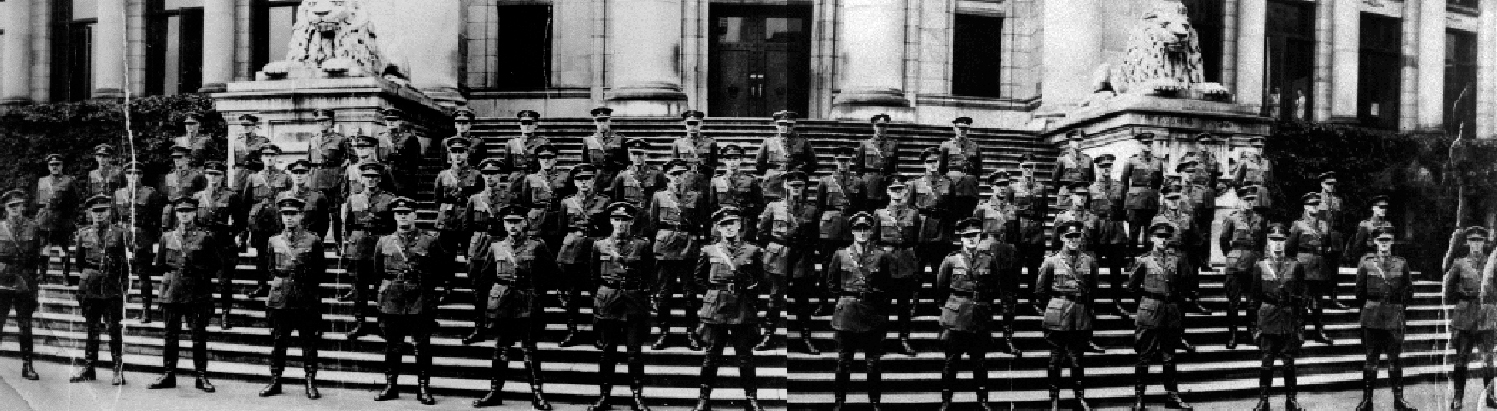
But similar incidents can be traced back to the earliest days of Canada. And for the history fans of Slaw, here is how the RCMP looked in a picture of the Estevan riot of 1931.

And just four years later on the steps of the then Vancouver courthouse in 1935.
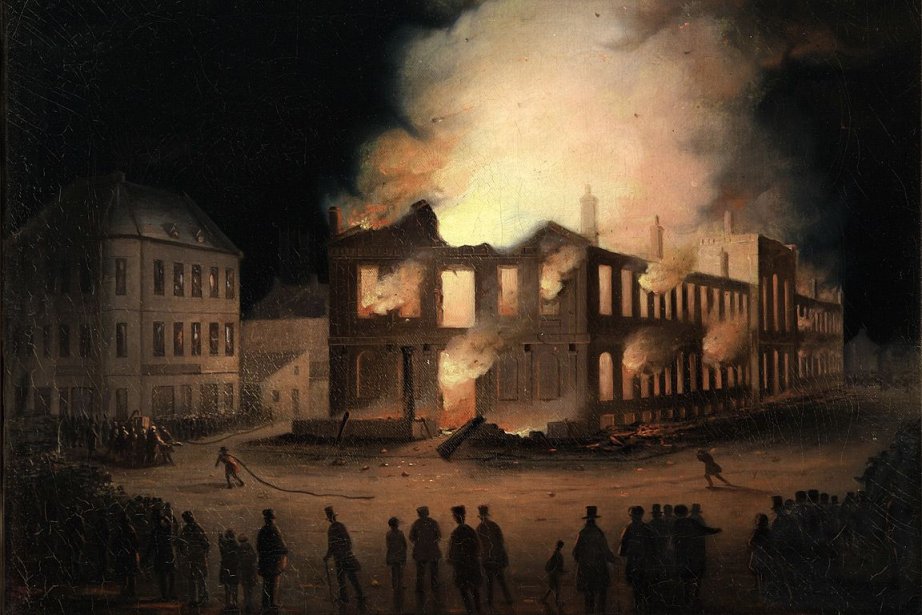
The Parliament in Montreal was torched in 1849 while the members were yet sitting.
Though today, we were a long way from a Riot in the legal sense of section 64 of the Criminal Code as an unlawful assembly that has begun to disturb the peace tumultuously:
Her Majesty the Queen charges and commands all persons being assembled immediately to disperse and peaceably to depart to their habitations or to their lawful business on the pain of being guilty of an offence for which, on conviction, they may be sentenced to imprisonment for life.

However, the Queen must apparently be mentioned:
Indictment on the stat. 1 G. 1. c.5. § I. (the riot act) for a capital felony, in remaining together for one hour after the making of the proclamation under that statute. It appeared that about 250 persons had assembled together in a riotous manner, and had threatened to break threshing machines, when Dr. Jones, a magistrate, read the proclamation from the riot act; but in the reading it, he omitted to read the words ” God save the King,” at the conclusion.
Mr. Baron Vaughan and Mr. Justice Alderson held that, as those words at the end of the proclamation were omitted to be read, the charge could not be supported. Their Lordships directed an acquittal. Rex v. Child, 4 C. & P. 244.

Full post as published by Slaw.ca on June 26, 2010 (boomark / email).

#1 Online Legal Resource

On 08-25 at 15:46PM
Acute perpendicular parking #NYPD #NYFD
On 08-18 at 22:18PM
Parallel parking gone bad. Too much gas UES NYC
On 08-18 at 21:41PM
UES NYC
On 08-18 at 21:25PM
Twitter suspends journalist critical of broadcast partner's coverage on dubious grounds @guyadams #nbcfail #twitterfail
On 07-30 at 17:57PM
Model example of 1st Amendment suppression by the People of New York City's Michael Bloomberg #OWS #NYPD
On 07-12 at 21:07PM
AG Holder lackadaisical on Operation in our Sites domain name seizures & RIAA lobbied free speech suppression @dajaz1
On 06-08 at 22:44PM
Why is the Catholic Church going to court over Obama contraception policy? @NewYorker commentary
On 05-31 at 10:08AM
Monks sue Louisiana for right to sell caskets made from forrest destroyed by Katrina
On 05-31 at 07:47AM
Are the abortion ultrasound laws headed for the Supreme Court?
On 05-15 at 21:52PM





A Minor Dispute Regarding the Peaceable Kingdom
Nick Cassavetes Sues New Line Over "Peaceable Kingdom" Directing Job
Sotheby's Accused of Undisclosed Conflict of Interest





 |
|
Contact Us | About Us | Celebrity Law Blog |
Our Partners | Disclaimer
| Law Blog Directory
| Law Jobs
| Law Tweets
| Oil Spill Video
All original material © 1999-2011 by USLaw.com. All other material, including Blog Directory feed content, are © by their respective copyright holders. |