
Home -> Law Blog Directory -> Media & Entertainment Law Blogs -> Sports Law Blog
(866) 635-2689 for Personal Injury or (866) 635-9402 for Criminal Defense
Find a Local Lawyer
Divorce (866) 635-6190
Personal Injury (866) 635-2689
Criminal Defense (866) 635-9402

Media & Entertainment Law
: Sports Law BlogBryce Brentz and Teams Requesting that Players Use Medical Devices for Abnormally Good Health
By Rick Karcher, Michael McCann, Geoffrey Rapp, Greg Skidmore, and Howard Wasserman

 In last month's Major League Baseball draft, the Boston Red Sox drafted Bryce Brentz, a 21-year-old outfielder from Middle Tennessee State University, as a supplementary first round pick. The Red Sox and Brentz quickly worked out a contract and Brentz is now playing for the Lowell Spinners in Class A (short season). He's off to a very slow start -- a .152 batting average after his first 105 at-bats -- but it's early and he's expected to hit well.
That expectation is based in part on Brentz's college career, during which he was considered one of the best amateur hitters around. Despite his college success, the Red Sox want Brentz to make some changes as he transitions from amateur to professional. That's to be expected, of course, especially with switching from aluminum bats to wooden bats and from playing several times a week to playing everyday for weeks on end.
One uncommon change the Red Sox expect Brentz to make concerns his eyes. After he was drafted, the Red Sox told Brentz -- whose vision is either 20/20 or very close to it -- that he needed to wear contact lenses so that his vision would improve to 20/15 or 20/12. Brentz accepted the Sox request and is now wearing contacts for this first time in his life. He tells Brian McPherson of the Providence Journal that wearing contacts has impacted his hitting, both good and bad, depending on the kind of pitch thrown:
I can see the edge of the contact on my eyes when I look around, like in the peripheral . . . Looking at something, it stands out more. It?s more clear. It?s more crisp. But on a fastball, it looks like it?s closer than it really is. I?ve just got to get used to it.Asking a player to wear contact lenses is not a very invasive request. Contacts, as those of us who wear them know, are relatively easy to wear once you get the hang of them, though they sometimes cause the eye to become dry and can occasionally be annoying for other reasons. But if a player doesn't like to wear contacts, he can simply take them off after the game; wearing contacts does not change a person's body, they only cause the person's eye to see better for as long as they worn.
But what about the fact that Brentz has normal or almost normal 20/20 vision? And say he had declined the Red Sox's request because he felt that his 20/20 vision -- which was good enough for him to become one of the best hitters in college baseball -- was just fine as it was?
After-all, Brentz wearing contacts is not about correcting an injury; it's about improving his vision to a level better than normal.
Should players be expected, upon team request, to use medical devices in order to alter their normal health in a non-corrective way?
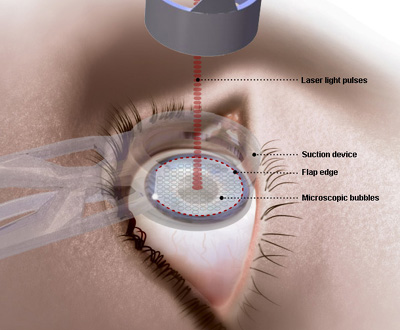
Or take it a step further. What happens if teams begin to ask players with 20/20 vision to have Lasik surgery so their eyes are surgically altered to see 20/15 or 20/12 vision? The Braves reportedly encouraged Greg Maddux to have Lasik surgery, though his vision was not 20/20 at the time. Would a request that a 20/20 player have surgery to enhance his body -- as opposed to correct an injury -- raise any ethical worries?
Would surgery in that instance be more like a (legal) steroid except made at the behest of the team?
To be sure, players, and not teams, decide whether players are going to have surgery. However, one could question how much "choice" a player believes he has if he wants to keep his job. But ultimately it's the player's call.
Teams, in fact, sometimes don't want players to have surgery, particularly if the player would be shelved for a long period of time. As I discussed in my SI column on Carlos Beltran and the Mets disagreement about the necessity and choice of doctor for a knee surgery, MLB's collective bargaining agreement is purposefully vague as to how to resolve disagreements about player health care:
Interestingly, and understandably, the collective bargaining agreement does not expressly resolve how teams and players should reconcile differences in opinions over the appropriate course of a player's treatment and who should perform a particular surgery. Instead, the agreement essentially encourages players and teams to work out their differences in good faith and with an appreciation for reasonableness, taking into consideration the desires of both parties.Vagueness may be the best course of action for issues of this sort, but as new medical devices and surgeries emerge, perhaps leagues and players' associations will need more specificity. It could be a matter that receives more attention in collective bargaining in the years ahead.
For a few related and terrific posts, see Alan Milstein's Clip, Clip, Baby! (from May 30, 2010), Howard Wasserman's Why is Steroids Use Considered Cheating (Oct. 10, 2006) and Greg Skidmore's Performance-Enhancing Surgery and Sports (April 21, 2005).

Full post as published by Sports Law Blog on July 20, 2010 (boomark / email).
Military Veterans Benefits
How to obtain full range of benefits for veterans and dependnets
Medicare
Guide to government health insurance for the elderly
National Practitioner Data Bank Fact
NPDB identifies unprofessional healthcare practitioners
Military Veterans Benefits, Part 2
Training, Healthcare, and Death Benefits
Hayes Bicycle Group
Recalls Quick-Release Devices
Health Insurers
Dictating Medical Decisions
Out Of Network Medical
allegedly overcharged for services by health insurers.
Scripps Health
Faces Medical Services Billing Class Action
DVD Players Recalled by Wal-Mart Due to Fire Hazard
DVD Players Recalled by Wal-Mart Due to Fire Hazard
Fairview Red Wing Health Services
Undisclosed settlement in medical malpractice lawsuit.

#1 Online Legal Resource

On 08-25 at 15:46PM
Acute perpendicular parking #NYPD #NYFD
On 08-18 at 22:18PM
Parallel parking gone bad. Too much gas UES NYC
On 08-18 at 21:41PM
UES NYC
On 08-18 at 21:25PM
Twitter suspends journalist critical of broadcast partner's coverage on dubious grounds @guyadams #nbcfail #twitterfail
On 07-30 at 17:57PM
Model example of 1st Amendment suppression by the People of New York City's Michael Bloomberg #OWS #NYPD
On 07-12 at 21:07PM
AG Holder lackadaisical on Operation in our Sites domain name seizures & RIAA lobbied free speech suppression @dajaz1
On 06-08 at 22:44PM
Why is the Catholic Church going to court over Obama contraception policy? @NewYorker commentary
On 05-31 at 10:08AM
Monks sue Louisiana for right to sell caskets made from forrest destroyed by Katrina
On 05-31 at 07:47AM
Are the abortion ultrasound laws headed for the Supreme Court?
On 05-15 at 21:52PM




Hope for Victims of Defective Medical Devices
New GAO Reports: Medical Devices, Health Savings Accounts, U.S.-China Trade
FDA to hold strategic meeting on medical devices
Consumer Ads for Medical Devices Subject of Senate Panel





 |
|
Contact Us | About Us | Celebrity Law Blog |
Our Partners | Disclaimer
| Law Blog Directory
| Law Jobs
| Law Tweets
| Oil Spill Video
All original material © 1999-2011 by USLaw.com. All other material, including Blog Directory feed content, are © by their respective copyright holders. |