Home -> Law Blog Directory -> Intellectual Property Law Blogs -> IPKat
(866) 635-2689 for Personal Injury or (866) 635-9402 for Criminal Defense
Find a Local Lawyer
Divorce (866) 635-6190
Personal Injury (866) 635-2689
Criminal Defense (866) 635-9402

Intellectual Property Law
: IPKatStar Wars in Switzerland
By Johanna Gibson, David Pearce, Jeremy Phillips and Ilanah Simon.
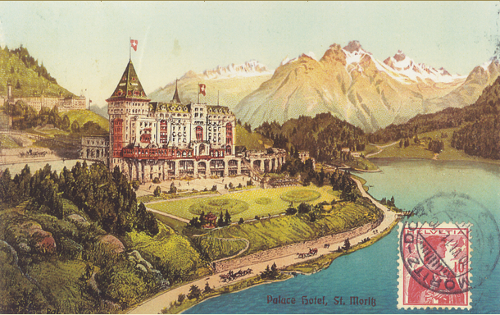
The Swiss Supreme Court recently (12 January 2011) finally settled a five year battle over the right to award stars to hotels between
 Schweizer Hotelier-Verein (SHV; incumbent, ranking hotels using stars since 1979) and Gastrosuisse (challenger, filed its own "stars" trade marks in 2005).
SHV sued promptly and obtained a preliminary injunction by the Commercial Court of Zurich barring Gastrosuisse from using stars to rank hotel quality. But from then onwards, it all went downhill for SHW: both the Commercial Court of Zurich in the proceedings on the merits and the Federal Supreme Court on appeal held that the use of stars for hotel rankings could not be monopolized, as the public would perceive the stars not as an indication of origin, but rather as a (generic) description of quality. There was no equivalent alternative to the use of stars for hotel rankings; using other signs - such as coins, circles, or hats - was not equivalent because of the meaning of "quality indication" attached to the star sign in the mind of the relevant public. Therefore, even if they had acquired distinctiveness (which was left open, because not decisive), they could not be protected, as they were barred absolutely from trade mark protection.
The case is legally interesting mainly because the marks SHV based its claim on (pictured below left the one for a three star hotel) are so called "guarantee marks" in the sense of art. 21 Swiss Trade Mark Act, and these are rare beasts and rarely litigated. Not to be confused with collective marks (see art. 66 Council Regulation 207/2009 for the Community Trade Mark definition of a collective mark), guarantee marks may be used by any third party that meets the criteria laid down in a regulation submitted by the trade mark owner to the Trade Mark Office. The owner may not refuse to grant permission of use under "FRAND" terms; however, he may request the payment of a fee for use.
SHV argued that the marks should be held valid because as guarantee marks, they could still be used by third parties as long as they met the published criteria and were therefore not removed from use by competitors. The Supreme Court's reasoning on this point is a bit muddy (para. 3.4 of the judgment), but essentially boils down to the fact that awarding stars for hotel quality has a subjective component, because the criteria cannot be laid down with sufficient precision, giving the trade mark owner in essence a veto right on anyone's use of the guarantee mark. In this sense, the stars were monopolized, and that was, because of their dominant meaning as indications of quality, not permissible. The Supreme Court also pointed out that SHV could only grant rights of use in the sign as registered (see below), but sought to enjoin any use of stars for hotels rankings (such as the one below right).
 Tourists travelling to Switzerland will therefore have to be aware that there are two competing systems for awarding stars to hotels in Switzerland, and the criteria are not equivalent. Not every 3 star hotel is created equal.
This Kat wonders whether in the age of the internet, these  "star systems" are all that relevant anymore. He usually checks the ratings of any hotel prior to booking on the relevant travel sites and finds these ratings more informative than any stars awarded by some organization (admittedly, the user generated rankings sometimes put too much emphasis on friendliness and not enough on infrastructure - if your room sucks, being nice won't make it a good room - but the star systems of established organizations tend to suffer from the opposite; i.e. over-reliance on measurements of infrastructure to the detriment of atmosphere). The image at the top of this post is of the Badrutt Palace Hotel in St. Moritz, btw, which would rank as five star in any ranking system. And as expensive in any social circle, unless you're a Russian oligarch.
Link to summary of decision; link to full text of decision of 12 January 2011 (both in German). If my memory serves me right, similar cases have been decided in other jurisdictions; if any reader has any information, feel free to post it in the comments.

Full post as published by IPKat on January 24, 2011 (boomark / email).
Sea Star Agrees $18.5M Settlement in Anti-trust Class Action
Sea Star Agrees $18.5M Settlement in Anti-trust Class Action
David Hasselhoff Divorce
Baywatch star reaches settlement in family lawsuit.
Newspaper Publisher
Star Tribune must pay St. Paul Pioneer Press a $3.8 million trade secrets act violations settlement.

#1 Online Legal Resource

On 08-25 at 15:46PM
Acute perpendicular parking #NYPD #NYFD
On 08-18 at 22:18PM
Parallel parking gone bad. Too much gas UES NYC
On 08-18 at 21:41PM
UES NYC
On 08-18 at 21:25PM
Twitter suspends journalist critical of broadcast partner's coverage on dubious grounds @guyadams #nbcfail #twitterfail
On 07-30 at 17:57PM
Model example of 1st Amendment suppression by the People of New York City's Michael Bloomberg #OWS #NYPD
On 07-12 at 21:07PM
AG Holder lackadaisical on Operation in our Sites domain name seizures & RIAA lobbied free speech suppression @dajaz1
On 06-08 at 22:44PM
Why is the Catholic Church going to court over Obama contraception policy? @NewYorker commentary
On 05-31 at 10:08AM
Monks sue Louisiana for right to sell caskets made from forrest destroyed by Katrina
On 05-31 at 07:47AM
Are the abortion ultrasound laws headed for the Supreme Court?
On 05-15 at 21:52PM





JOHN SCALZIS Guide to the Most Epic FAILs in Star Wars Design. Ill come right out and say it: St
'Star Wars' Empire Strykes Back Over Toy Plane
I'm giving everyone I know "The Force" this Christmas (without the bulky packaging).
Sunday Stupidity: Star (Trek vs. Wars)
Adrianne C -- I Was 'Molested' Outside Star Wars Expo





 |
|
Contact Us | About Us | Celebrity Law Blog |
Our Partners | Disclaimer
| Law Blog Directory
| Law Jobs
| Law Tweets
| Oil Spill Video
All original material © 1999-2011 by USLaw.com. All other material, including Blog Directory feed content, are © by their respective copyright holders. |