
Home -> Law Blog Directory -> Intellectual Property Law Blogs -> IPKat
(866) 635-2689 for Personal Injury or (866) 635-9402 for Criminal Defense
Find a Local Lawyer
Divorce (866) 635-6190
Personal Injury (866) 635-2689
Criminal Defense (866) 635-9402

Intellectual Property Law
: IPKatGalileo and the case of the ventilating hearing officer
By Johanna Gibson, David Pearce, Jeremy Phillips and Ilanah Simon.
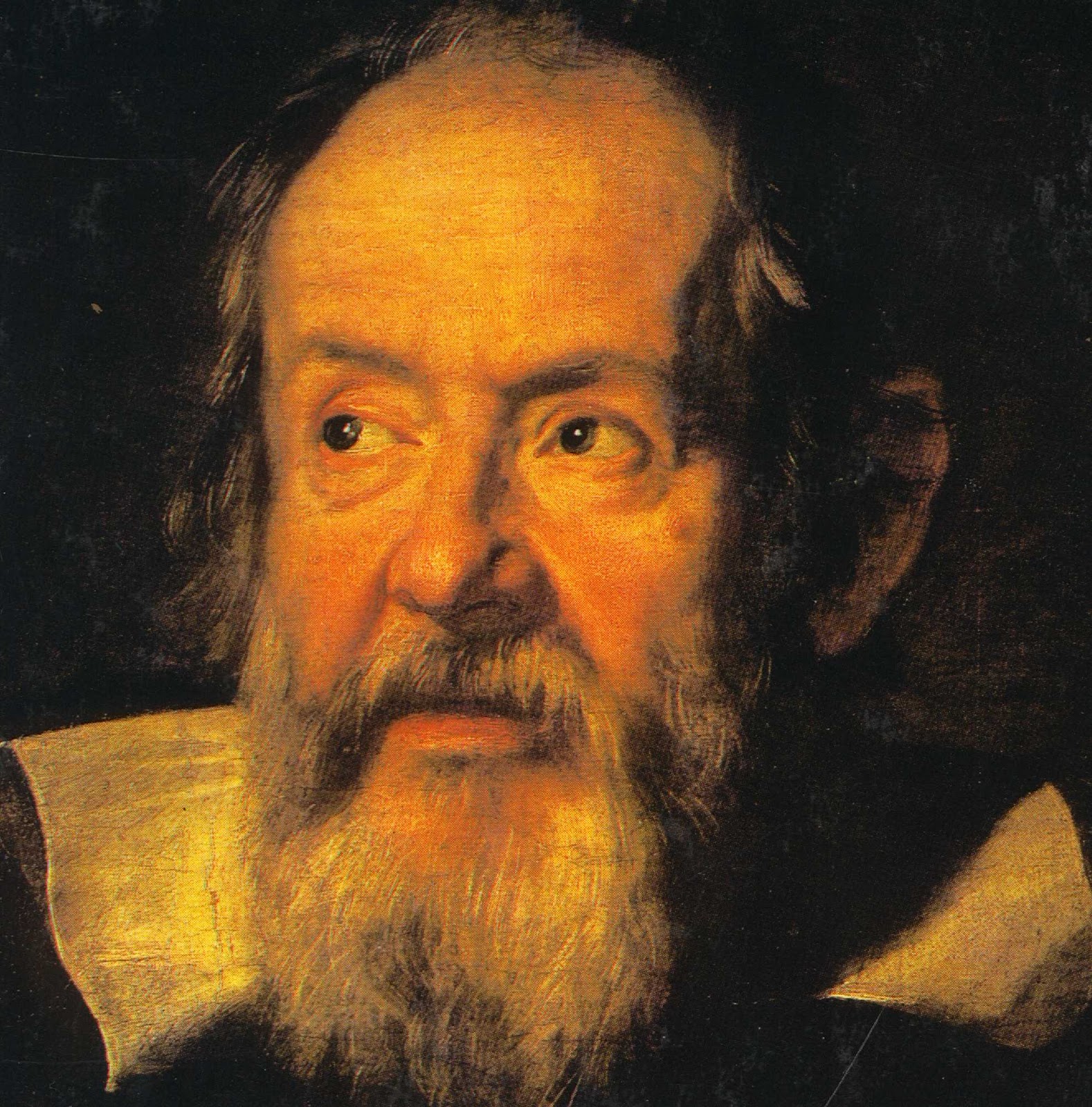 |
| The original Galileo |
 |
| The original European Community |
On appeal, Galileo argued that the hearing officer had got it wrong. First, he had applied the incorrect legal standard to his assessment of the evidence in relation to genuine use by imposing a quantitative threshold rather than a qualitative one. Secondly he shouldn't have partially revoked the trade marks since the pleaded attack on the marks extended only to the entire specification of goods, providing an inadequate opportunity to deal with the proposed limitations.
Floyd J allowed the appeal in part. In his view
* It was common ground that "there was no qualitative quantitative threshold" that use had to satisfy before being taken into consideration when establishing genuine use of a trade mark. It was therefore for Galileo to establish that the hearing officer had imposed a quantitative threshold when evaluating the evidence of use. In this case it was plain that the officer had not.
* Nor was there any no basis on which to suggest that the hearing officer had applied any special standard of proof to his evaluation of the evidence: all he did was to make the best determination of what use had been made of the mark in the difficult circumstances presented by the manner in which Galileo's evidence had been prepared.
* An applicant for revocation who believes that a mark had not been used at all within the relevant period in relation to any of the goods or services for which it is registered is entitled to plead that case, following which it is for the proprietor to plead what use it had made of the mark. While the burden of proof and the obligation to plead facts were different things, the burden of proving use was on the proprietor. The battle between the parties in revocation proceedings would thus usually be over the categories of goods on which the proprietor claimed to have used the mark. If the claim to actual use covered anything less than the entire specification, the unused portion was vulnerable to revocation, as every proprietor had to appreciate.
* A proprietor faced with an unrestricted application for revocation could not seriously claim to be taken by surprise by the suggestion that if it failed to prove use across the entire specification of goods, its mark would be revoked in respect of those goods for which use was not shown.
* On the other hand, procedural fairness had to be ensured in all proceedings, particularly where a hearing officer "ventilates possible restrictions to a specification at a hearing which had not previously been addressed in writing".
* A party who was faced with a restriction which took it by surprise -- or which it considered required further evidence which could not otherwise have been anticipated as being necessary -- needed time to ensure that an adequate opportunity was provided to deal with it.
* In this case the hearing officer had not excluded the possibility of further evidence being adduced or of a widening of the specification. It would accordingly have been open to Galileo to make submissions to the hearing officer about the width of the restrictions, even though the officer would not have been bound to accept them.
* Galileo's appeal would be dismissed except for one small triumph, where it was agreed that the words "consultancy in the field of computer hardware" could be included in the formula for the specification in Class 42 of the following services: ?rental of computer hardware, rental and leasing of computer software, installation, maintenance and updating of computer software; consultancy in the field of computer hardware; all for use in relation to travel and accommodation reservations".
The IPKat senses that Mr Justice Floyd was somewhat disappointed that the status of the European Union as a litigant in these proceedings was not challenged, or at least discussed: "No point is taken about the identity of this somewhat unusual party", he said at para.3 of his decision, which rather suggests that someone should make the effort to do just that whenever the European Union is next a litigant in his court. Merpel is still trying to decide why the judge used the unusual term "ventilate"; still, she muses, it's better for a hearing officer to ventilate an issue than to give himself airs ...
The Kats agree that the word "ventilate" is actually a contraction of "venti" and "latte", which means that a nice fresh coffee is called for.
Galileo and cats here

Full post as published by IPKat on January 25, 2011 (boomark / email).
Law Enforcement and Criminal Justice Career Choices
Descriptions of law enforcement occupations
Officer Firing Upheld
Pueblo pays $20,000 settlement to rightfully discharged officer.
Canadian Government
former RCMP officer claims thousands of disability dollars clawed back.
Police Officer Slander
City of Detroit agrees to $25,000 settlement.
Police Whistleblower
Officer awarded $980,000 for whistleblower violations and retaliation.
Police Officer
City of Tonawanda awards former employee $47,000 wrongful termination settlement.
Boat Crash
Police officer awarded $100,000 settlement after crashing into bridge piling while on duty.

#1 Online Legal Resource

On 08-25 at 15:46PM
Acute perpendicular parking #NYPD #NYFD
On 08-18 at 22:18PM
Parallel parking gone bad. Too much gas UES NYC
On 08-18 at 21:41PM
UES NYC
On 08-18 at 21:25PM
Twitter suspends journalist critical of broadcast partner's coverage on dubious grounds @guyadams #nbcfail #twitterfail
On 07-30 at 17:57PM
Model example of 1st Amendment suppression by the People of New York City's Michael Bloomberg #OWS #NYPD
On 07-12 at 21:07PM
AG Holder lackadaisical on Operation in our Sites domain name seizures & RIAA lobbied free speech suppression @dajaz1
On 06-08 at 22:44PM
Why is the Catholic Church going to court over Obama contraception policy? @NewYorker commentary
On 05-31 at 10:08AM
Monks sue Louisiana for right to sell caskets made from forrest destroyed by Katrina
On 05-31 at 07:47AM
Are the abortion ultrasound laws headed for the Supreme Court?
On 05-15 at 21:52PM





Galileo Gives Finger to Florence
Vatican To Honor Galileo With Statue
Designation of the hearing officer in an administrative disciplinary action
Federal Court Reverses The U.S. Tax Court
Employment - Hearing officer's authority: Fitzgerald v. McFall (COA 3/13/2009)





 |
|
Contact Us | About Us | Celebrity Law Blog |
Our Partners | Disclaimer
| Law Blog Directory
| Law Jobs
| Law Tweets
| Oil Spill Video
All original material © 1999-2011 by USLaw.com. All other material, including Blog Directory feed content, are © by their respective copyright holders. |