
Home -> Law Blog Directory -> Intellectual Property Law Blogs -> Seattle Trademark Lawyer
(866) 635-2689 for Personal Injury or (866) 635-9402 for Criminal Defense
Find a Local Lawyer
Divorce (866) 635-6190
Personal Injury (866) 635-2689
Criminal Defense (866) 635-9402

Intellectual Property Law
: Seattle Trademark LawyerConsumer Lacks Standing to Assert False Advertising Claim Against Manufacturer
By Michael Atkins

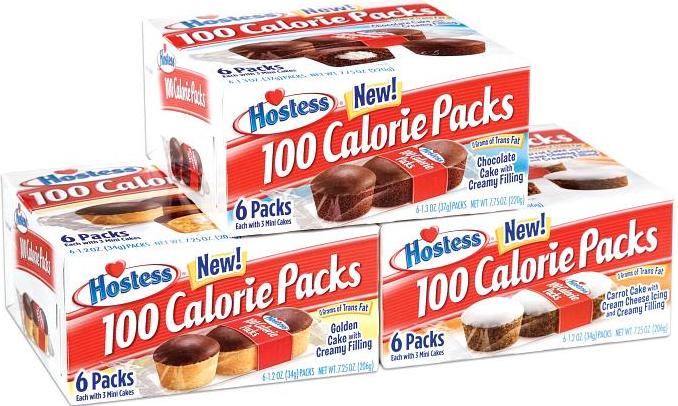 Even if Hostess’ statement was untrue, a consumer had no standing
to assert a false advertising claim because he wasn’t a competitor.
Plaintiff Victor Guttmann filed a putative class action in the Central District of California against defendant Hostess Brands, Inc., alleging false advertising.
His complaint stated that Hostess makes false and misleading statements to market six varieties of baked goods under the label “Hostess 100 Calorie Packs.” In particular, he claimed that Hostess markets Hostess 100 Calorie Packs as containing “0 Grams of Trans Fat,” even though such products contain partially hydrogenated oils.
He sought restitution and damages on behalf of all persons 'who purchased, on or after January 1, 2007, one or more of the Hostess 100 Calorie Packs in the United States for their own use rather than resale or distribution,” and an injunction.
Hostess moved to dismiss plaintiff’s claims on standing grounds, among other things. It argued that because Mr. Guttmann is a consumer, and not a competitor, he can’t maintain a false advertising claim.
The court agreed.
“To establish standing under the ‘false advertising’ prong of the Lanham Act,” the court found, “‘a plaintiff must show: (1) a commercial injury based upon a misrepresentation about a product; and (2) that the injury is ‘competitive,' or harmful to the plaintiff’s ability to compete with the defendant.’ Thus, ‘[f]or a plaintiff to have standing, the parties must be competitors in the sense that they ‘vie for the same dollars from the same consumer group,’ and the alleged misrepresentation must at least theoretically effect a diversion of business from the plaintiff to the defendant.’”
The court concluded: “Here, Plaintiff alleges that he ‘purchased the [Hostess 100 Calorie Packs] for personal, family or household purposes.’ He also seeks injunctive relief on behalf of class members who purchase Hostess 100 Calorie Packs ‘for their own use rather than resale or distribution.’ Plaintiff, by his own admission, is a consumer, not a competitor. Because Plaintiff alleges neither commercial nor competitive injury, he is precluded from asserting a false advertising claim under the Lanham Act. The Court therefore dismisses Plaintiff’s Lanham Act claim with prejudice due to lack of standing.”
Peviani v. Hostess Brands, Inc., __ F.Supp.2d __, 2010 WL 4553510, No. 10-2303 (C.D. Calif. Nov. 3, 2010).
Full post as published by Seattle Trademark Lawyer on November 22, 2010 (boomark / email).
Truth In Lending Act
Consumer Loans and Consumer Credit Protection Act
Ladder Accident Injury Claims
Were you or a loved one injured in a ladder accident?
Kimkins
alleging false advertising of online dieting.
Comcast Corp.
alleging false advertising related to the speed of its Internet service.
Activision
alleging false advertising of games for Nintendo Wii, that do not support Dolby Pro Logic II surround sound.
Convicted Caretakers
Senior care center agrees to $175,000 settlement in false advertising lawsuit.
Airborne Settlement
Company agrees to pay consumers $23.3 million class action settlement for false advertising.
Food/Supplements
involving food poisoning, food product recalls, false advertising or labeling, vitamin, weight loss and diet supplement issues.

#1 Online Legal Resource

On 08-25 at 15:46PM
Acute perpendicular parking #NYPD #NYFD
On 08-18 at 22:18PM
Parallel parking gone bad. Too much gas UES NYC
On 08-18 at 21:41PM
UES NYC
On 08-18 at 21:25PM
Twitter suspends journalist critical of broadcast partner's coverage on dubious grounds @guyadams #nbcfail #twitterfail
On 07-30 at 17:57PM
Model example of 1st Amendment suppression by the People of New York City's Michael Bloomberg #OWS #NYPD
On 07-12 at 21:07PM
AG Holder lackadaisical on Operation in our Sites domain name seizures & RIAA lobbied free speech suppression @dajaz1
On 06-08 at 22:44PM
Why is the Catholic Church going to court over Obama contraception policy? @NewYorker commentary
On 05-31 at 10:08AM
Monks sue Louisiana for right to sell caskets made from forrest destroyed by Katrina
On 05-31 at 07:47AM
Are the abortion ultrasound laws headed for the Supreme Court?
On 05-15 at 21:52PM





retailer lacks standing against manufacturer
New note on 43(a)(1)(A) standing
230 protects another review site; Lanham Act claims also fail
Drug Manufacturer False Advertising
Can A Message Board Violate New Jersey's Consumer Fraud Act
What is Misleading Advertising





 |
|
Contact Us | About Us | Celebrity Law Blog |
Our Partners | Disclaimer
| Law Blog Directory
| Law Jobs
| Law Tweets
| Oil Spill Video
All original material © 1999-2011 by USLaw.com. All other material, including Blog Directory feed content, are © by their respective copyright holders. |