
Home -> Law Blog Directory -> Legal News Blogs -> Law Blog - WSJ.com
(866) 635-2689 for Personal Injury or (866) 635-9402 for Criminal Defense
Find a Local Lawyer
Divorce (866) 635-6190
Personal Injury (866) 635-2689
Criminal Defense (866) 635-9402

Legal News
: Law Blog - WSJ.comJudge Rejects Credit Rating Firms? Free-Speech Claims
By Nathan Koppel
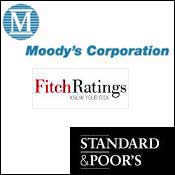 As we have studiously noted, ratings firms have gotten sued left and right by investors who claim the firms issued misleading opinions about mortgage-backed securities and were partly to blame for the financial crisis. (Here's one post on the rash of litigation against ratings firms and another noting that the SEC chief favors lowering the barriers to suing ratings firms.)
Ratings firms often have cloaked themselves in the Constitution, claiming that their ratings are mere opinions protected by the First Amendment. And courts in the past have held that investors can not sue on the alleged grounds that ratings are too high or too low, unless, that is, plaintiffs can also show that particular ratings were issued with "actual malice."
But on Wednesday, Manhattan federal Judge Shira Scheindlin dealt a blow to ratings firms, rejecting a free-speech defense asserted by Moody's Investors Services and Standard & Poor’s. See the opinion here.
The suit alleges the two ratings services issued misleading ratings to a $5.86 billion investment vehicle that collapsed in 2007. Scheindlin acknowledged that ratings typically are "matters of public concern," protected by the First Amendment from liability. However, the protection doesn't apply, she wrote, "where a rating agency has disseminated their ratings to a select group of investors rather than to the public at large," as the plaintiffs in the case alleged.
The ruling is one of the first to interpret whether the First Amendment applies to ratings of certain securities, such as mortgage-backed securities, which tend to be rated as discrete issuances for investors as opposed to more general ratings of corporate bonds.
"Her decision breaks new ground on the issue of whether the First Amendment applies to ratings of privately offered securities," says New York attorney David Grais.
"The court's ruling on the First Amendment was based purely on plaintiffs' allegations, and we are hopeful the court will review the issue once the true facts are before it," said Michael Adler, a Moody's spokesperson.
And S& P spokesman noted the court dismissed all but one of the plaintiffs' 11 claims. "We are confident that we will prevail on the remaining claim," he said.
Full post as published by Law Blog - WSJ.com on September 03, 2009 (boomark / email).
Parody is a Protected Form of Speech
Targets of criticism seek to shut down Internet sites that poke fun
Truth In Lending Act
Consumer Loans and Consumer Credit Protection Act
Paxil Lawsuit
Paxil Claims, Lawsuits, and Injuries
Bankruptcy Law
A complete prime (pre-2005)
Collection Agencies and Creditors
How to deal and stop the harassment
Federal Adoption Tax Credit
Financial Incentive for Adoptive Parents
TransUnion
Class action credit practices suit offers free credit monitoring services for millions.
Free Speech
Canterbury agrees to pay $60,000 settlement in civil rights lawsuit.
Indianapolis
alleging the city's police are overly aggressive against the homeless in violation of the protection of free speech and unreasonable searches guaranteed in the US Constitution.
ValueClick
allegedly violated consumer protection laws by promising ‘free’ goods that where not actually free.
Whole Foods
And Other Firms Sued by California Attorney General,
Baltimore Strip Search Class Action
Judge Gives Go-ahead

#1 Online Legal Resource

On 08-25 at 15:46PM
Acute perpendicular parking #NYPD #NYFD
On 08-18 at 22:18PM
Parallel parking gone bad. Too much gas UES NYC
On 08-18 at 21:41PM
UES NYC
On 08-18 at 21:25PM
Twitter suspends journalist critical of broadcast partner's coverage on dubious grounds @guyadams #nbcfail #twitterfail
On 07-30 at 17:57PM
Model example of 1st Amendment suppression by the People of New York City's Michael Bloomberg #OWS #NYPD
On 07-12 at 21:07PM
AG Holder lackadaisical on Operation in our Sites domain name seizures & RIAA lobbied free speech suppression @dajaz1
On 06-08 at 22:44PM
Why is the Catholic Church going to court over Obama contraception policy? @NewYorker commentary
On 05-31 at 10:08AM
Monks sue Louisiana for right to sell caskets made from forrest destroyed by Katrina
On 05-31 at 07:47AM
Are the abortion ultrasound laws headed for the Supreme Court?
On 05-15 at 21:52PM




Credit Rating Companies Rated "Conflicted" by Congress.
Oversight Committee Hearing on Credit Rating Agencies and the Financial Crisis
Credit Rating After Bankruptcy or Foreclosure
Next Steps on the Credit Rating Fiasco
Cox Testifies on Credit Rating Agencies
Reform Suggestions on Rating Agencies





 |
|
Contact Us | About Us | Celebrity Law Blog |
Our Partners | Disclaimer
| Law Blog Directory
| Law Jobs
| Law Tweets
| Oil Spill Video
All original material © 1999-2011 by USLaw.com. All other material, including Blog Directory feed content, are © by their respective copyright holders. |